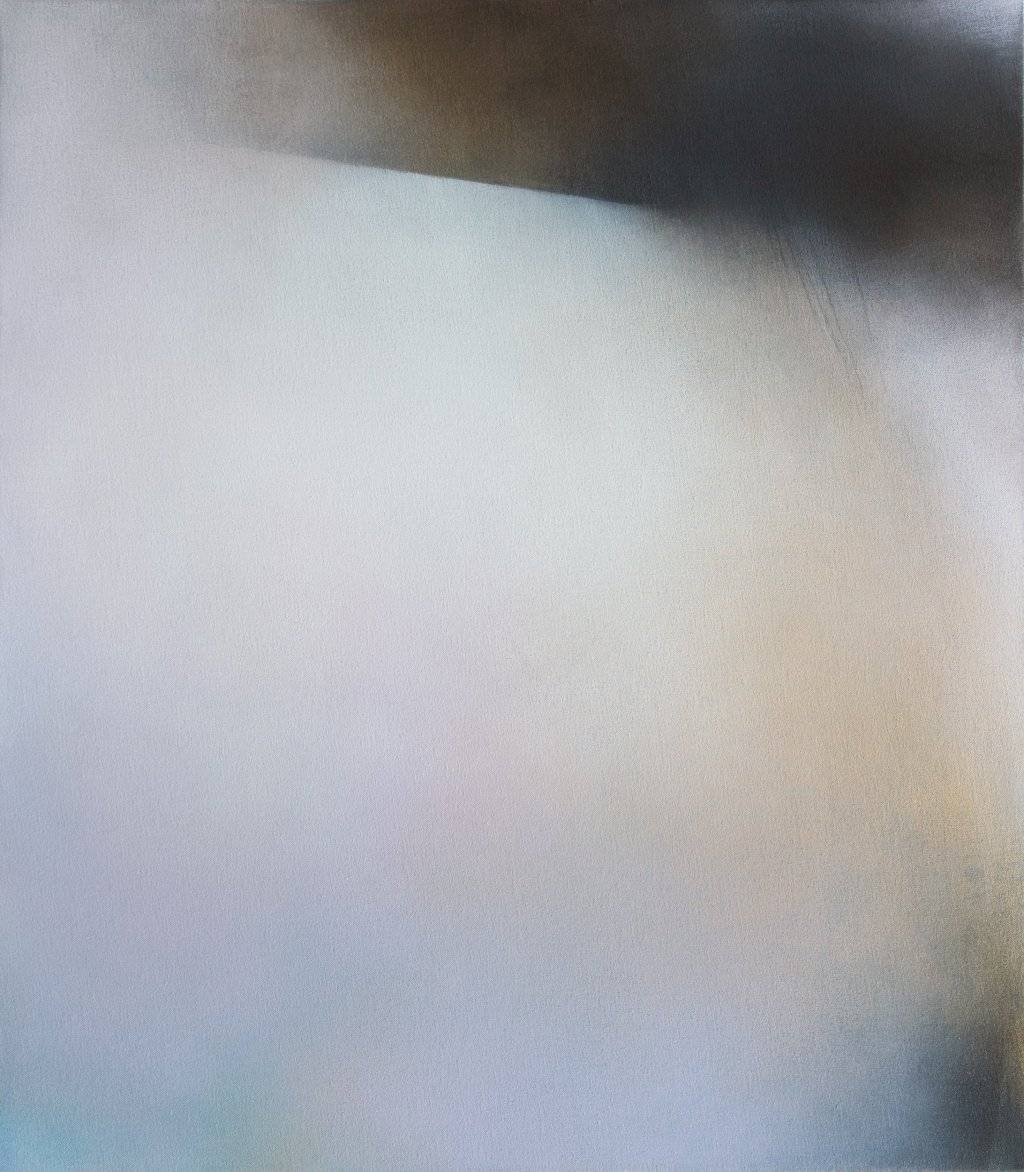
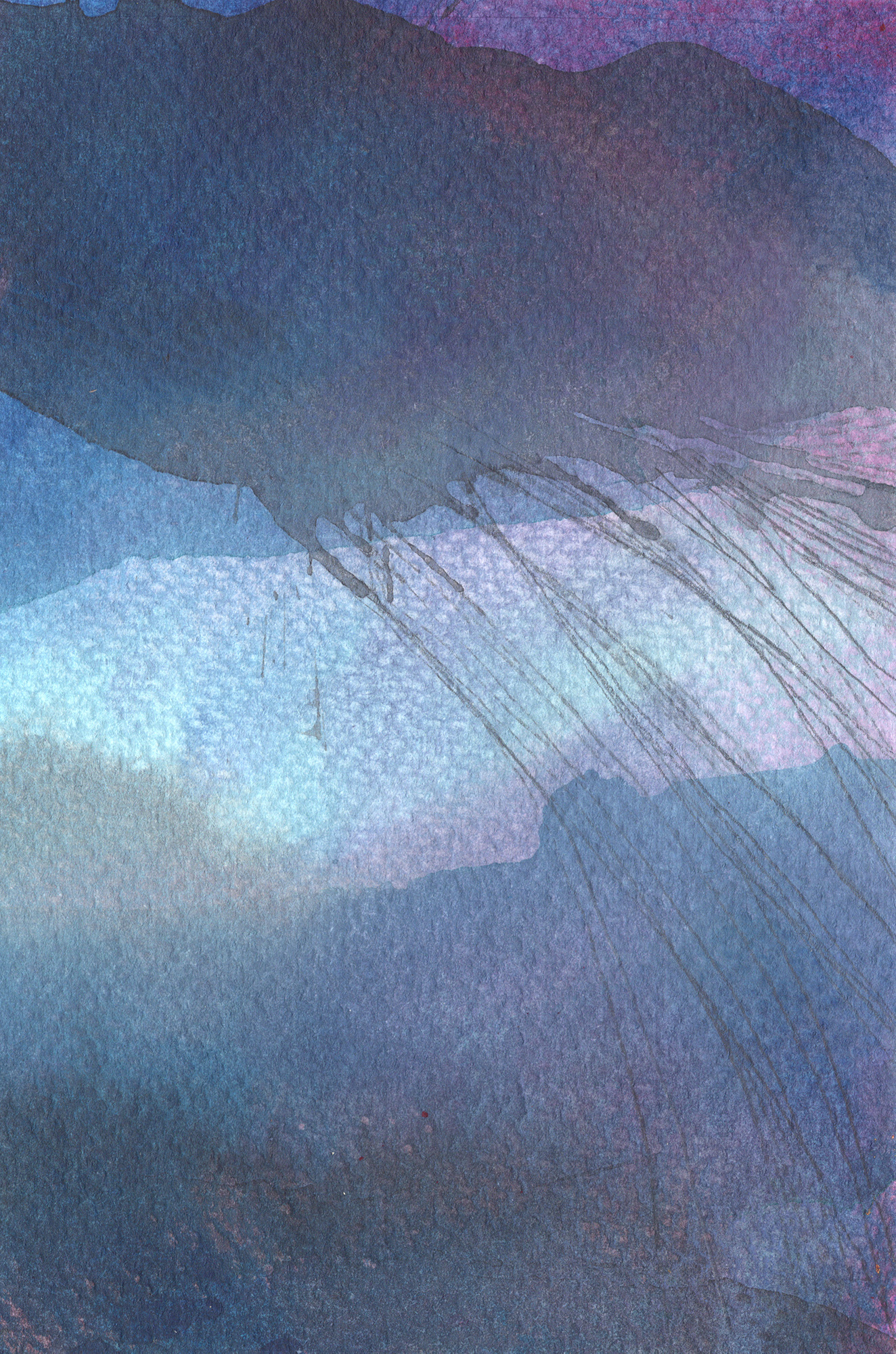
White cliffs, sea spray, and faulted limestone… “New Salt” is an experiment with minimalism of colour and hints of geological drawing.
Inspired by the chalk cliffs near Bridlington (North Yorkshire), this painting was one of my first attempts to pin down the folded layers of Jurassic limestone (chalk) on our local coast. My first visit view of the chalk was from afar… an afternoon boat tour to Bempton to see the nesting cliffs. I visited again with an Open University Geological Society group, for a weekend trip and lecturer expert in the British chalk. These specific cliffs still repeat in my art and sketchbooks nearly 20 years later. (My first visit to the Yorkshire coast, with the boat trip, was in 2007)
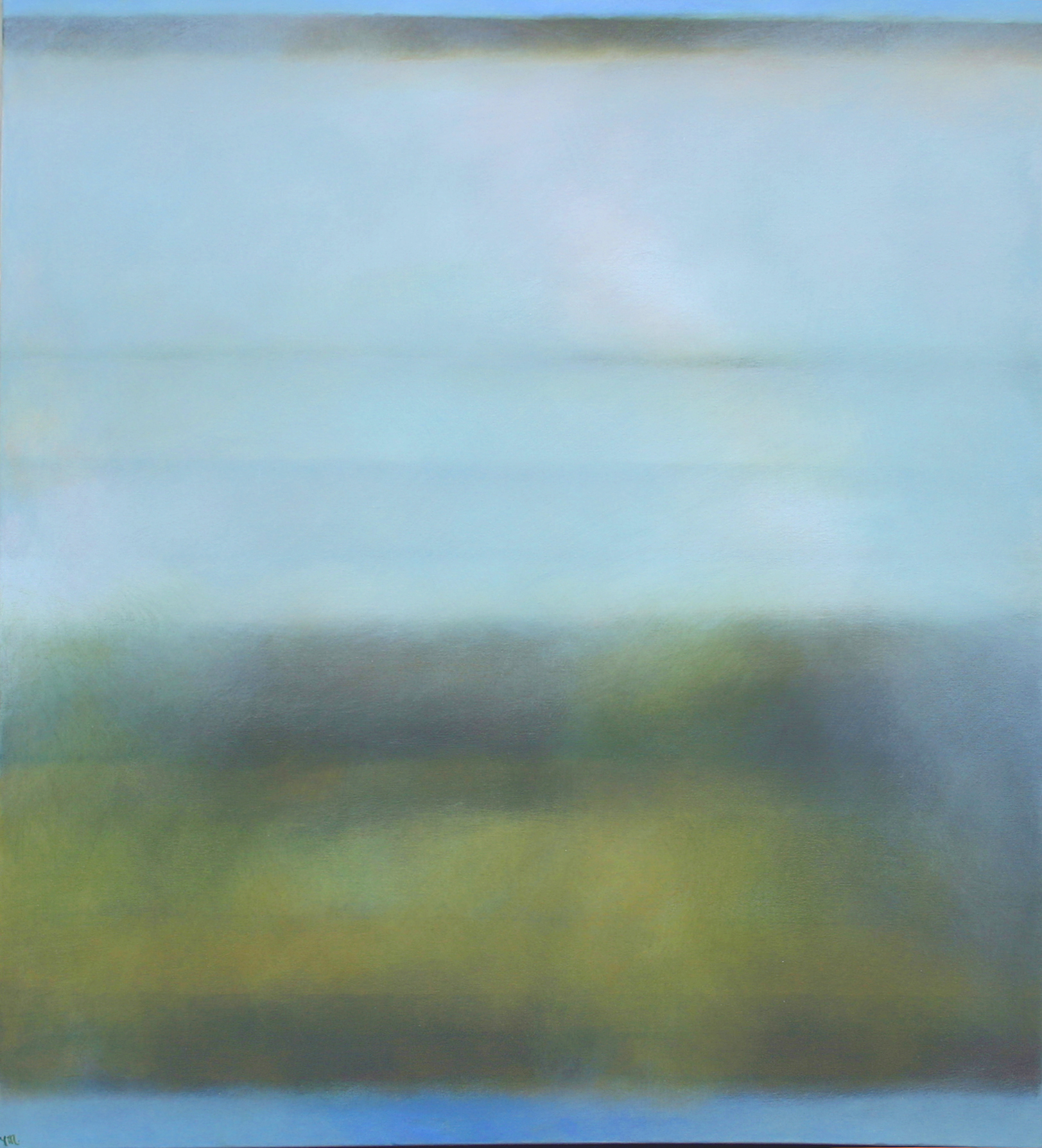
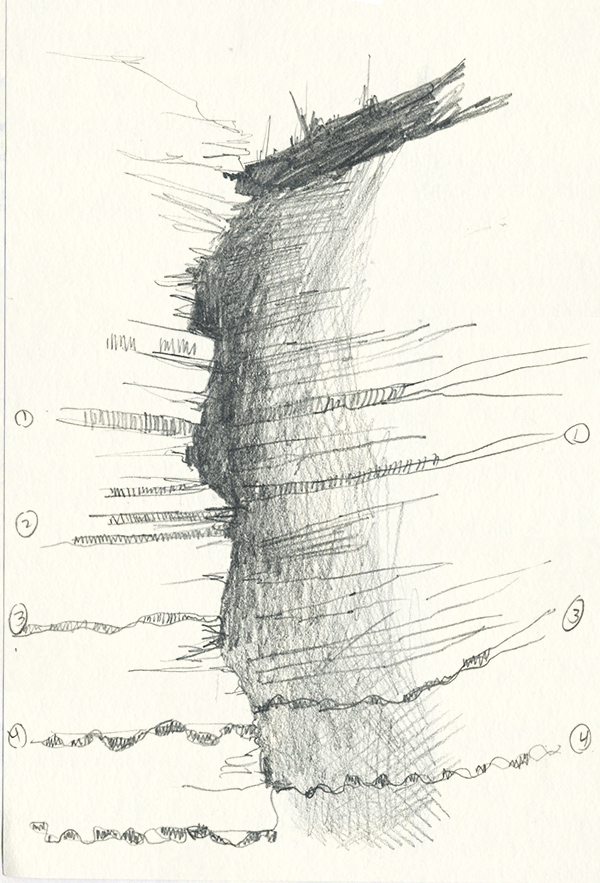
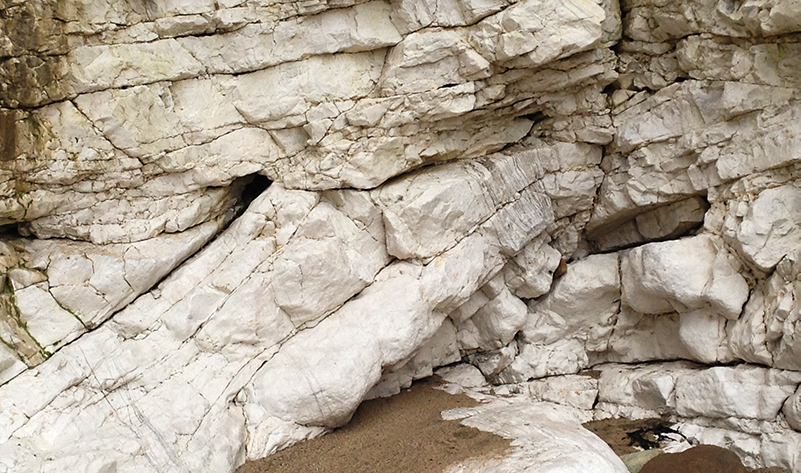
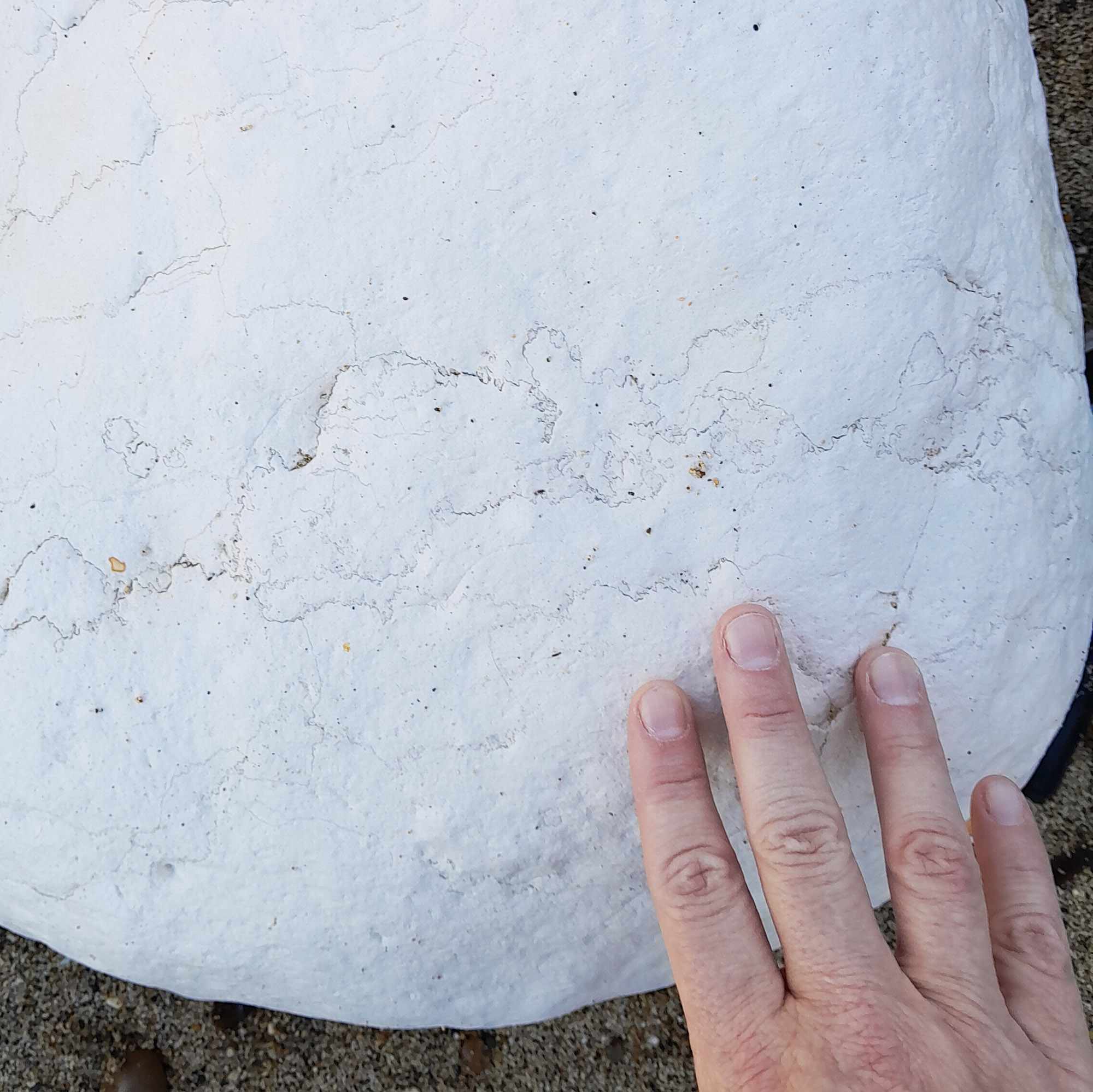
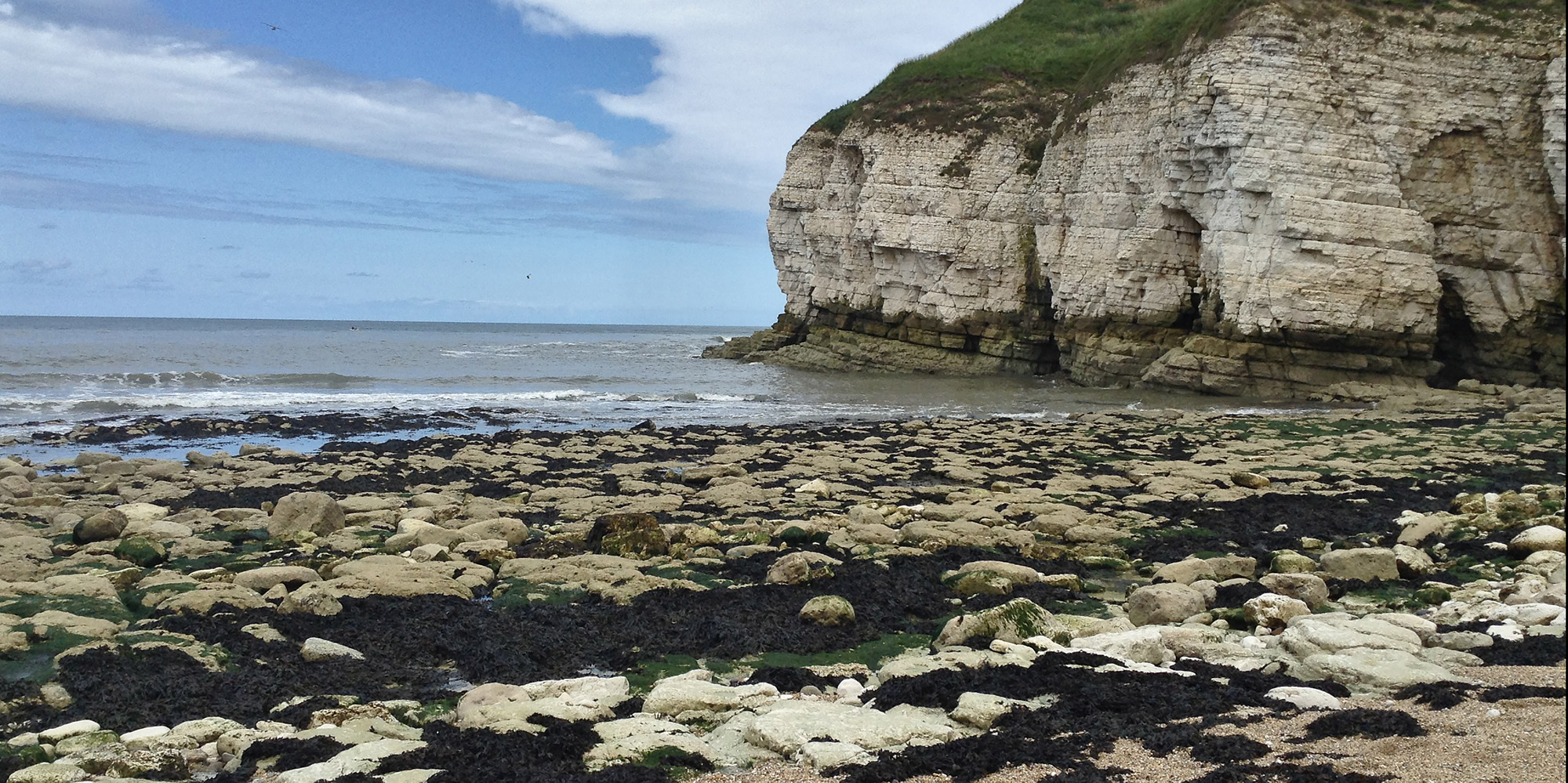
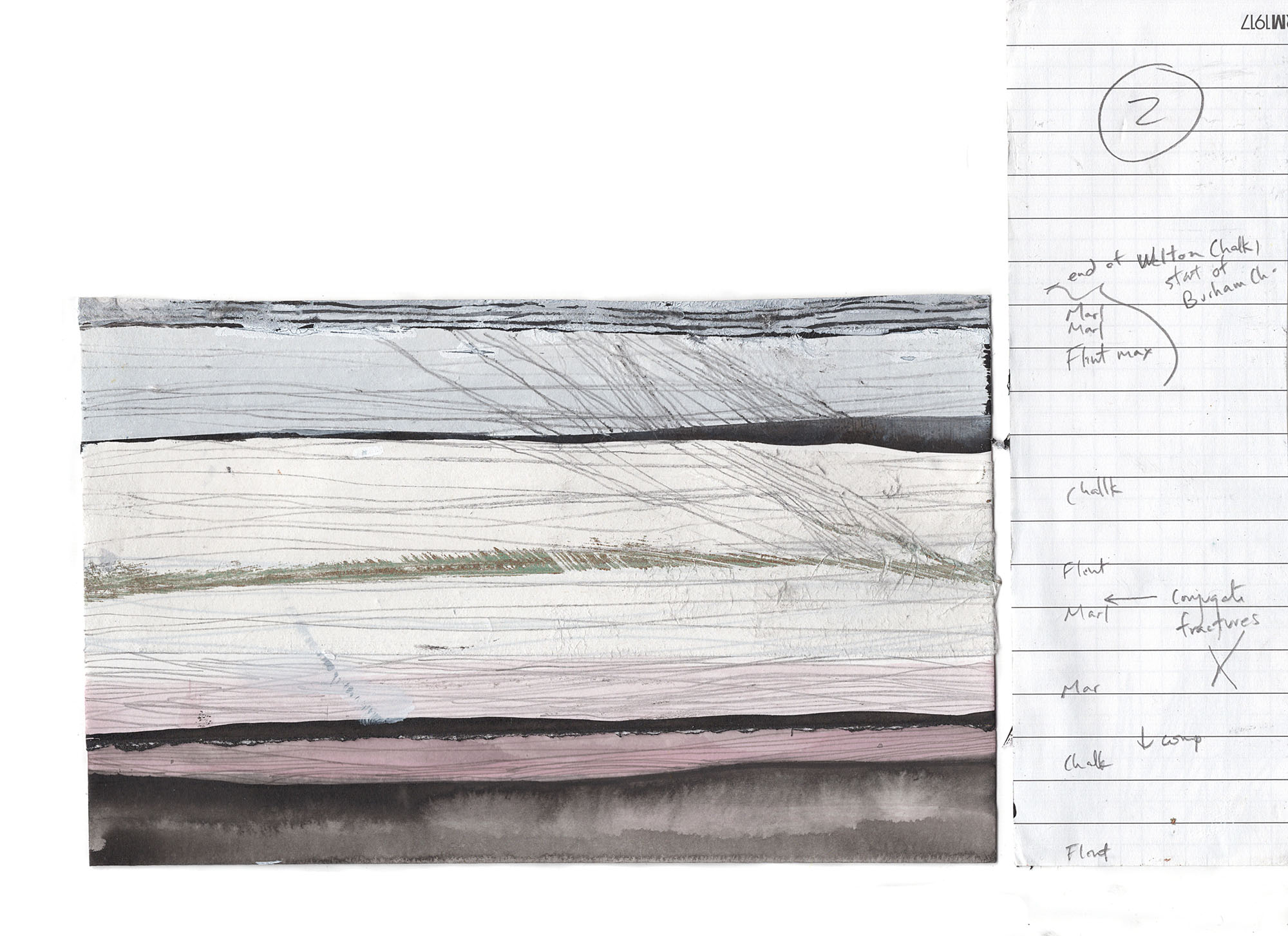
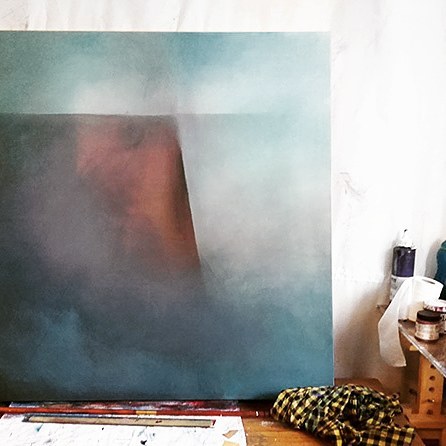
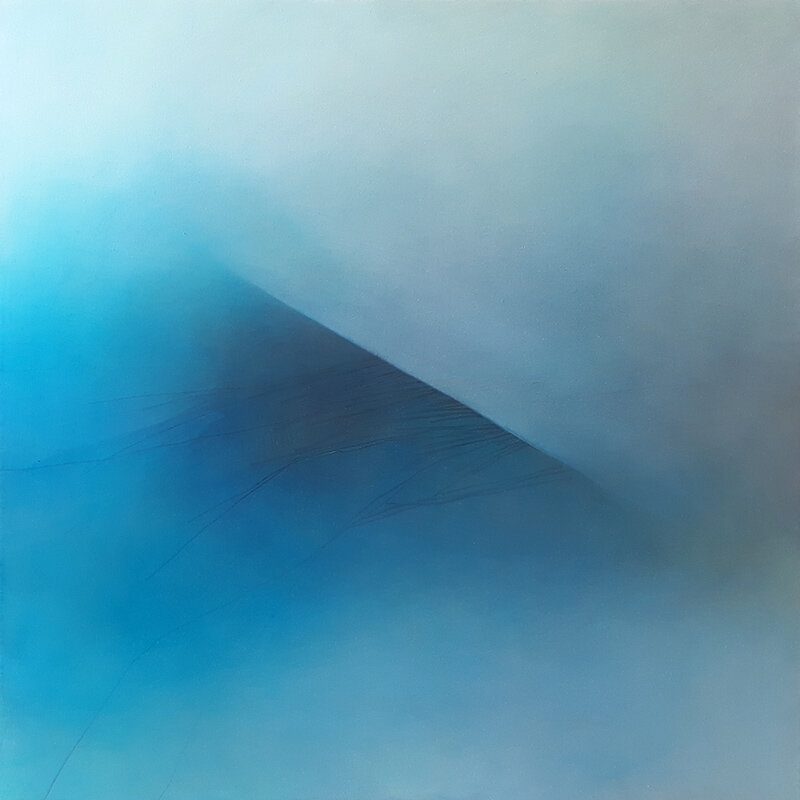
Images left to right, top to bottom: “Bempton Cliffs” painting on canvas where I was too afraid to go full white, sketchbook page mapping the flint layers in the chalk at North Landing, faulted and folded chalk layers at Selwicks Bay (with calcite veins), me pointing to marl/stylolites in a chalk boulder, view at North Landing(? possibly Selwicks), drawing/collage from the draft stages of the “Deep Time” project, abstracted chalk cliffs in a small postcard painting from the “Solitude” 2020 series.
But what drove me crazy? WHITE cliffs! Glazing with white in acrylic paint is, quite frankly, the quest of a crazy person. (that’s me!)
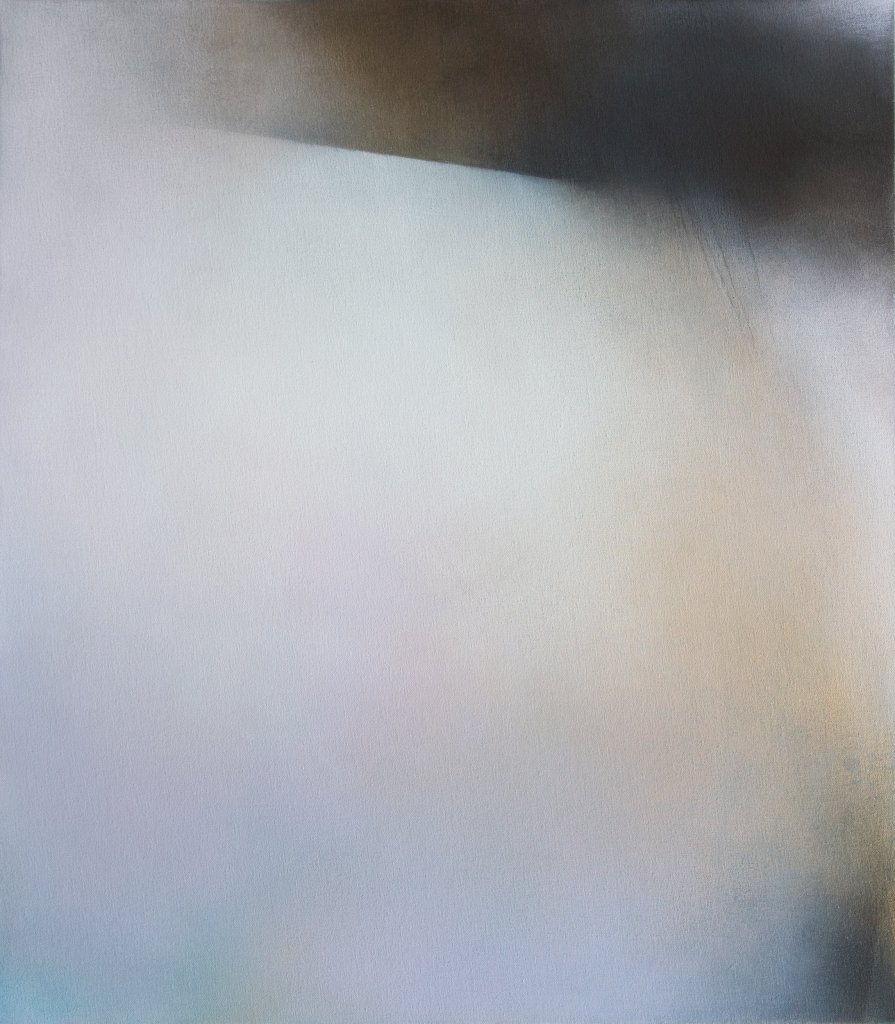
My paintings are built with very very fine layers, one over the over, slowly building up to the final tones and shadows. In “New Salt” there are foundation layers of bright ultramarine blue, pthalo blue, and magenta. Over this I slowly glazed deep umbers and deep blue mixes to create the glacial till strip of the top of the cliff. (I use a burnt umber or sienna and ultramarine blue mix for my dark blues) I also drew in the small cluster of dark lines (calcite) at this point.
But over that… I glazed slightly tinted transparent zinc white – with just a touch of violet or blue to not be pure white. (although zinc is naturally a more ‘blue’ white than titanium) Over and over and over.
Most glazes are very wet, a mix about about 1/4 paint to 3/4 water. I suggest this method to NO ONE. Seriously, don’t do it unless you want to drive yourself batty. (and much can go wrong, including lifting back up the previous unbound glazes you previously painted)
At times I’d glaze back in some colour. Or draw back in some lines. Then glaze white over them again. Bring some back. Glaze white. Back and forth. Nearly at the end I can start putting in more solid white dry scumbles to build up strong white areas, like where the middle of the white meets the dark strip.
In the end, the soft hazy airy white cliffs sit under the dark stretch of till (quaternary glacial till). The only hint of the tremendous ancient pressure in the rock given by a small branching of lines reaching down (secondary calcite veins formed after faulting). And hints of blue salty sea mist lap up from the bottom edge – there’s even a hint of a sea cave below!
*”New Salt” is named for the salt water of the North Sea and shouldn’t be confused with Saltwick Nab, which is further north on the coast.
“New Salt” is on exhibition with Beecher’s Gallery, Ross-on-Wye.