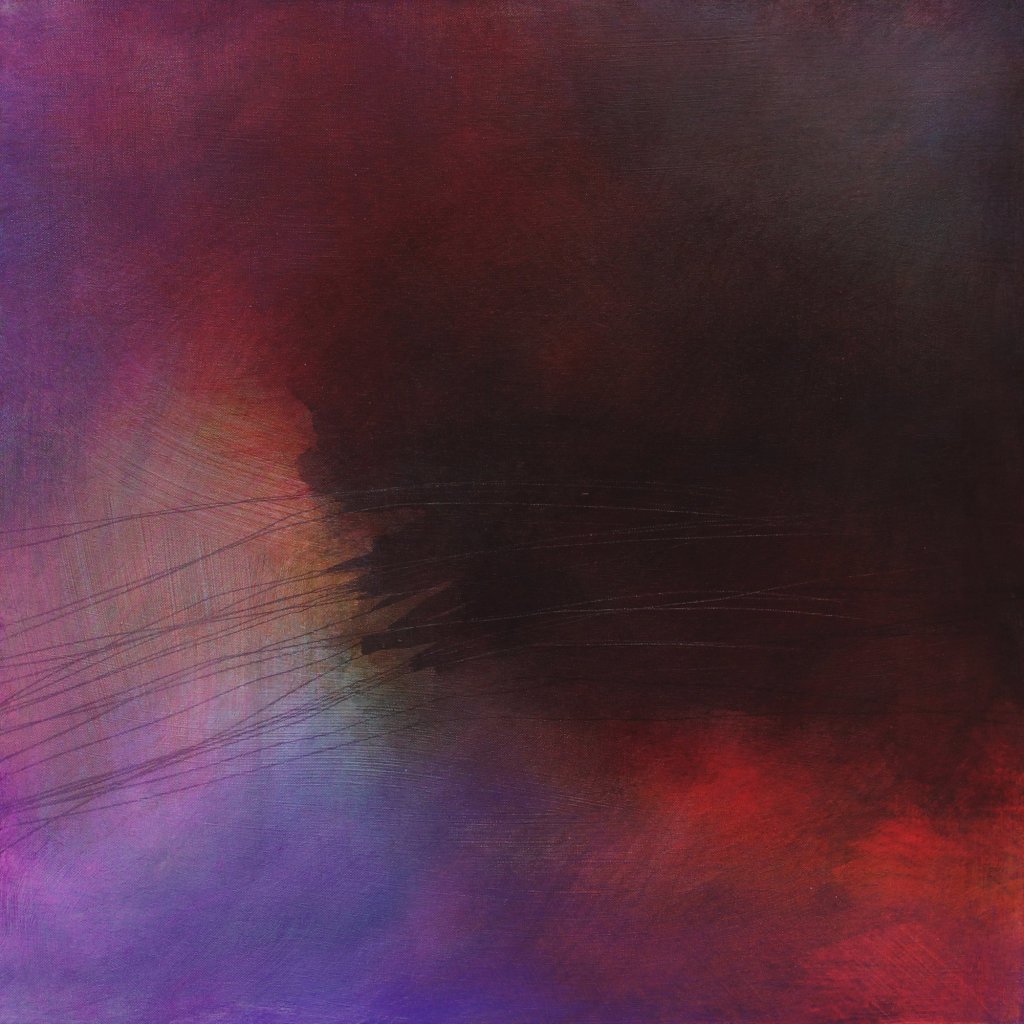
Back in 2020 I finished my 4 year adventure of my MSc in Space Science & Technology. During my studies Mars landscapes and patterns dotted my sketchbook, because artists usually are drawing the things on their mind.
During an online artist residency (we still couldn’t travel) I also became intrigued by the auroras on Mars. It took me from Google Scholar searches, to collage, to drawing, to watercolour, and finally to canvas. And a LOT of purple paint.
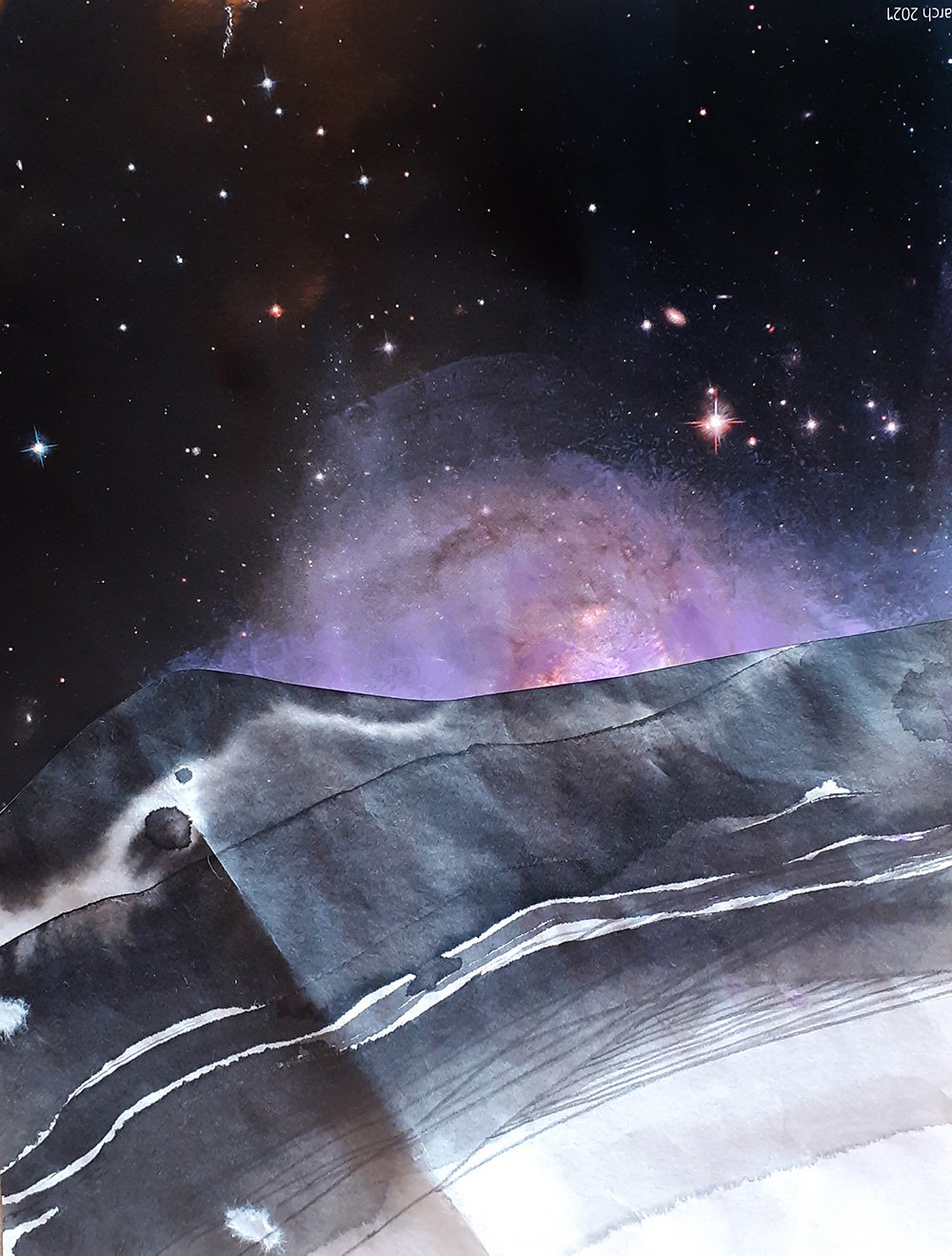

At the beginning I was primarily working with collages and the colours, since after discovering that Mars does have aurora the interesting bit was that they, unlike on Earth, were in the ultraviolet wavelength. Which means invisible to the human eye, but visible to special cameras like on the NASA MAVEN orbiter. And of course ‘ultraviolet’ to an artist brings to mind two specific things: ultramarine blue and any violet pigment. In my case Quinacridone Violet is part of my palette, but Dioxazine Purple with Ultraviolet Blue or Pthalo Blue makes a lovely violet as well.
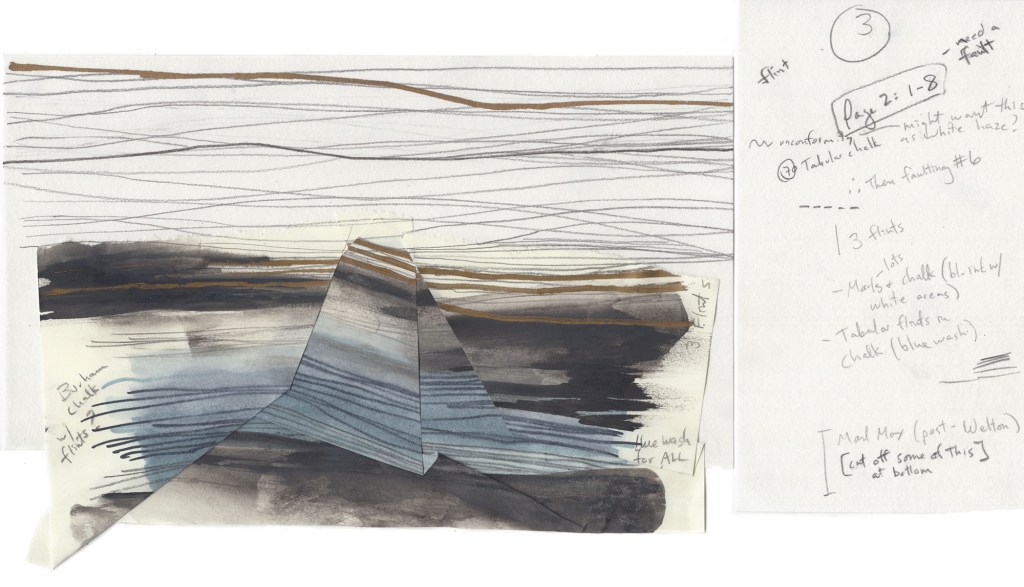
But my brain kept returning to the lines that I would want to put into the paintings. Rather than geology lines, I thought about the path that particles were taking through the Mars atmosphere. On Earth, auroras are charged particles (the glow) following the layers of the atmosphere travelling horizontally (not all the time though) and creating the swathes of northern lights we recognise.


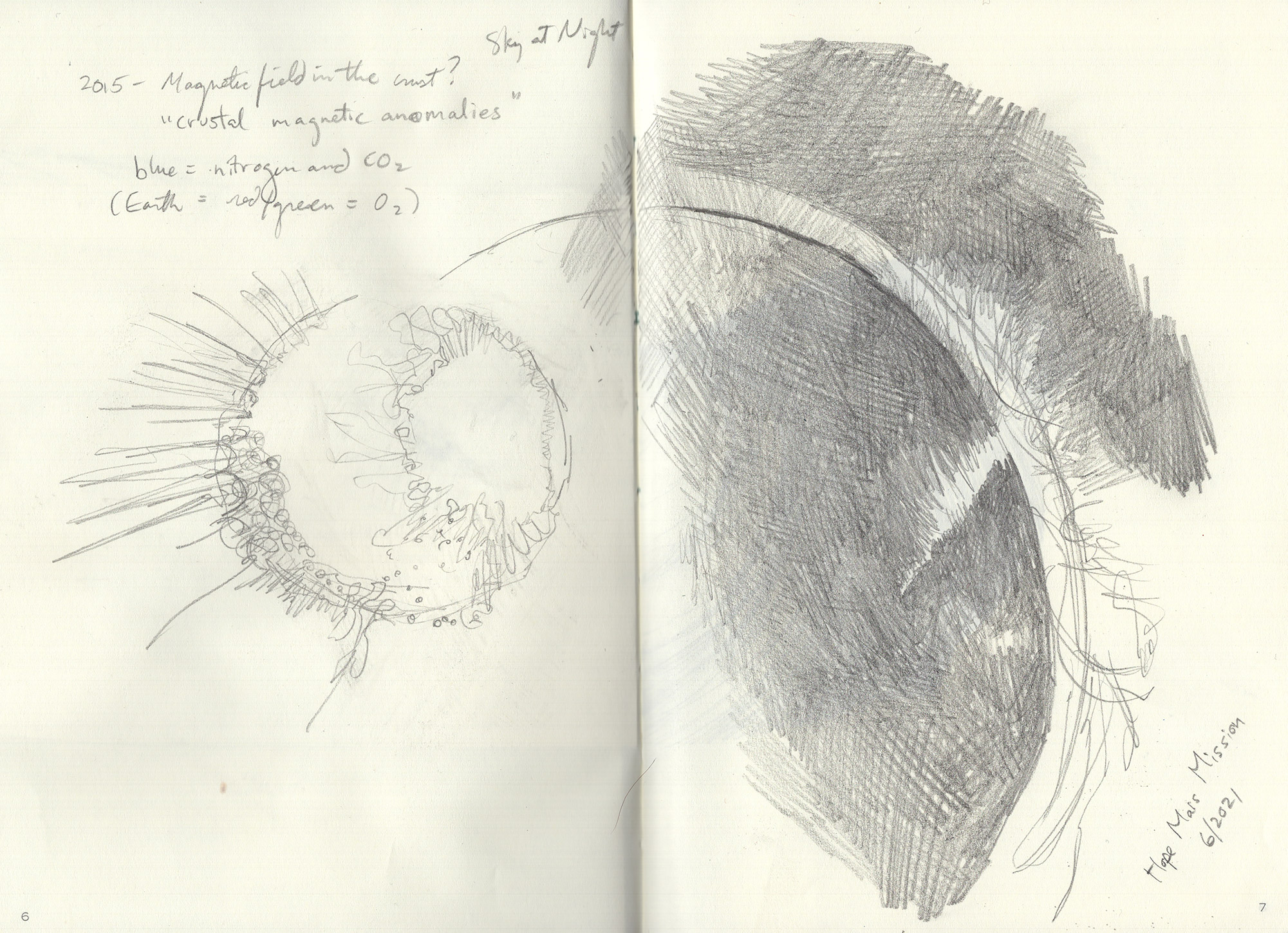
But on Mars these particles must move differently. The speed (velocity) and direction (vector) would be quite different in a thin atmosphere without significant layers or a magnetic pole. My brain just kept thinking a vertical velocity vector would be somehow ‘right’. Maybe auroras on Mars might look more like vertical curtains?

The breakthrough came when I found a particular journal article with useful diagrams – Plasma Acceleration above Martian Magnetic Anomalies, by Lundin et al (2006). Because the atmospheric and/or magnetic poles aren’t as strong a structure to direct the charged particles, the actual magnetic features on the surface of Mars influences the aurora.
This creates ‘cusp’ aurora between magnetic fields around surface features or ‘halo’ aurora circling larger magnetic structures created by the Martian crust topology. And gives me my lines for drawing!
The artwork featured is available for sale from my studio, click here to buy Halo or Mars Rise.



 TINA MAMMOSER